top of page


north ma-ra
North Mara
At-A-Glance
Biome:
Capital City:
Region:
Category
Population:
Flora:
Fauna:
Societal Structure:
Red Hex Status:
Highly Diverse
Coozan
Middle-East Anarkand
B
183M
Highly Diverse
Highly Diverse
Empirical
Active. 100% efficiency
L a n d s c a p e


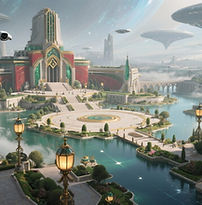

Coozan Residential
Coozan Military Vase
The Great Shard
The Paragon


A b o u t
The lands collectively known as Mara were not always divided. Long before borders hardened and flags multiplied, Mara was a single nation shaped by Marakai exploration and settlement. Drawn from Marrakis during its outward expansion, the Marakai colonists brought with them trade networks, civic structures, and a cultural emphasis on order, shared prosperity, and continental cooperation. Mara flourished as a bridge territory, culturally distinct yet deeply tied to Marrakis through ancestry, language, and commerce.
This balance began to fracture when the Radamis Empire turned its attention towards Mara. Positioned strategically and rich in infrastructure rather than raw resources, Mara represented influence rather than territory, a foothold into western political alignment. Radamis intervention began subtly, through advisors, economic incentives, and ideological exchange. Over time, this presence hardened into manipulation.
Imperial agents promoted narratives of Marakai exploitation, reframing Mara’s history as one of quiet subjugation rather than partnership. Emperor Radamik was elevated in local mythmaking as a symbol of unity and destiny, contrasted deliberately against Marrakis’ perceived pragmatism and alliance-bound restraint.
The situation escalated into a full coup. Radamis-backed factions seized key cities and administrative centres, dismantling Mara’s unified governance and replacing it with competing leadership structures. One faction embraced imperial centralisation, hierarchy, and ideological loyalty to Radamis. The other clung to Marakai-influenced governance, favouring shared councils, trade alignment, and continental cooperation. What followed was an entire era of civil war, fought not only with weapons but with belief, propaganda, and cultural erasure. Families, cities, and even religious orders split along ideological lines.
The conflict devastated Mara. Infrastructure collapsed, trade routes were severed, and once-shared cultural symbols were reinterpreted or destroyed. The Marakai, alarmed by the scale of the fracture and aware of their historical responsibility, attempted repeatedly to intervene diplomatically. These efforts achieved limited success until the Temple of Anark formally stepped in, declaring Mara’s conflict a destabilising threat to the wider balance of Anarkand.
After prolonged negotiations mediated jointly by Marrakis and the Temple of Anark, an agreement was reached. Mara would no longer exist as a single nation. The northern territories, where Radamis ideology had taken firm hold, would be recognised as North Mara, an independent state with its own governance and external alignment. The southern territories would become South Mara, maintaining formal ties with Marrakis and entering the 12e Alliance as a cooperative partner. This decision ended open warfare, but it did not heal the division.
South Mara rebuilt itself around Marakai principles. Its governance favours representative councils, economic interdependence, and alliance-based security. Culturally, it retains strong Marakai influence in architecture, education, and law. The population largely views Marrakis as a stabilising force, and while suspicion of Radamis remains strong, South Mara focuses on integration rather than confrontation. Its alignment with the 12e Alliance places it firmly within continental cooperation frameworks.
North Mara followed a different path. Its leadership structure is more centralised, shaped by Radamis political doctrine and imperial symbolism. While officially neutral, North Mara maintains close ideological and economic ties with the Radamis Empire. Emperor Radamik is revered in state rhetoric, and imperial aesthetics permeate public spaces. North Mara presents itself as sovereign and independent, yet many observers note the depth of Radamis influence embedded within its institutions.
Relations between North and South Mara remain tense. The border is heavily monitored, cultural exchange is limited, and historical narratives diverge sharply. Each side teaches a different version of Mara’s past, with blame and legitimacy claimed by both. The Marakai continue to act as mediators where possible, though their influence is no longer absolute. To some in North Mara, they are reminders of an unwanted past. To many in South Mara, they are guardians of continuity.
The division of Mara stands as one of Anarkand’s most cautionary histories. It is a story of how ideology can fracture shared identity, how external power can reshape internal belief, and how peace agreements can halt bloodshed without restoring unity. North Mara and South Mara coexist, separated by more than borders, each carrying the unresolved weight of a nation that once stood whole.
bottom of page