top of page


lee-o-fo-ross
Leoforos
At-A-Glance
Biome:
Capital City:
Region:
Category
Population:
Flora:
Fauna:
Societal Structure:
Red Hex Status:
Varied
Aurelion
South-East Anarkand
D
56M
Highly Diverse
Highly Diverse
Civic Concord
Active. 99% efficiency
L a n d s c a p e


Concordia
Old palace of the kings
Basic Housing
Old-era market


A b o u t
In the south-eastern spine of Anarkand, Leoforos exists in a perpetual state of awareness. To its west stands the insular Kingdom of El-Dhabouri, guarded by tradition and rigid charter. To its east lies Eastern Iola, scarred by fracture, memory, and the long shadow of the Red Wall. Between these two powers, Leoforos has learned a singular lesson across the eras: survival through balance.
Leoforos is not vast, nor especially rich in raw resources, yet it has become indispensable. Its land forms a natural corridor of trade, migration, diplomacy, and quiet influence. Roads, caravan routes, rail-lines, and air corridors converge here like threads through a needle.
Leoforos was once a collection of city-states and trade enclaves, bound loosely by language and shared geography. When the greater Iolan union fractured and El-Dhabouri withdrew inward, Leoforos found itself suddenly exposed, pressured from both sides by incompatible worldviews. Rather than choose alignment, Leoforos chose structure.
The modern state emerged during the late pre-War of Iola period, formalised as a Civic Concord, a governance model built on layered councils representing merchants, labour guilds, scholars, faith groups, and regional stewards. No single voice rules; decisions are slow, debated, and deliberately cautious. Whilst this has frustrated neighbours seeking swift compliance. It has also kept Leoforos intact.
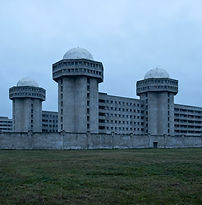
The land and Character of Leoforos is a one of contrasts. Dry, ochre plains grow near El-Dhabouri’s borders, terraced green highlands and river-fed valleys shape the east. Stone cities with pale façades designed to reflect heat and signal neutrality. The architecture avoids grandeur. Towers are capped, walls are low, and public buildings are wide rather than tall. Nothing in Leoforos is designed to intimidate. Everything is designed to be approachable.
Leoforos is governed by the Concord of Nine, a rotating council whose members are selected through merit, reputation, and long civic service rather than popularity. Terms are short, overlapping, and deliberately staggered to prevent dominance.
Corruption is not absent, but it is difficult. Transparency laws require public accounting of decisions, and civic records are open to inspection by any citizen. Leoforan people tend to value debate over decree, compromise over victory, and stability over ambition. This has earned them a reputation as frustrating negotiators and exceptional mediators.
THE IOLAN FRACTURE AND THE RED WALL
The War of Iola reshaped Leoforos more than any other external event. As Eastern and Western Iola turned upon one another, Leoforos became a passageway for refugees, diplomats, spies, and arms traders alike. The Concord closed its borders only once - briefly - during the bloodiest year of the conflict, a decision still debated today.
When the Red Wall rose, stained by violence and memory, Leoforos helped broker ceasefire talks, prisoner exchanges, and humanitarian corridors. While it never took a military stance, it paid dearly in assassinations, sabotage, and political pressure.
Many in Eastern Iola view Leoforos with cautious gratitude. Others accuse it of standing aside while history burned.
Leoforos accepts both views.
RELATIONS WITH EL-DHABOURI
The Kingdom of El-Dhabouri regards Leoforos as morally flexible, overly modern, and dangerously open. Leoforos, in turn, views El-Dhabouri as principled yet inflexible.
Trade between them is limited but essential. El-Dhabouri relies on Leoforan intermediaries for rare goods it refuses to source directly. Leoforos respects El-Dhabouri’s visitor charters to the letter, often training diplomats specifically for interaction with the Kingdom.
bottom of page